Pubblicità


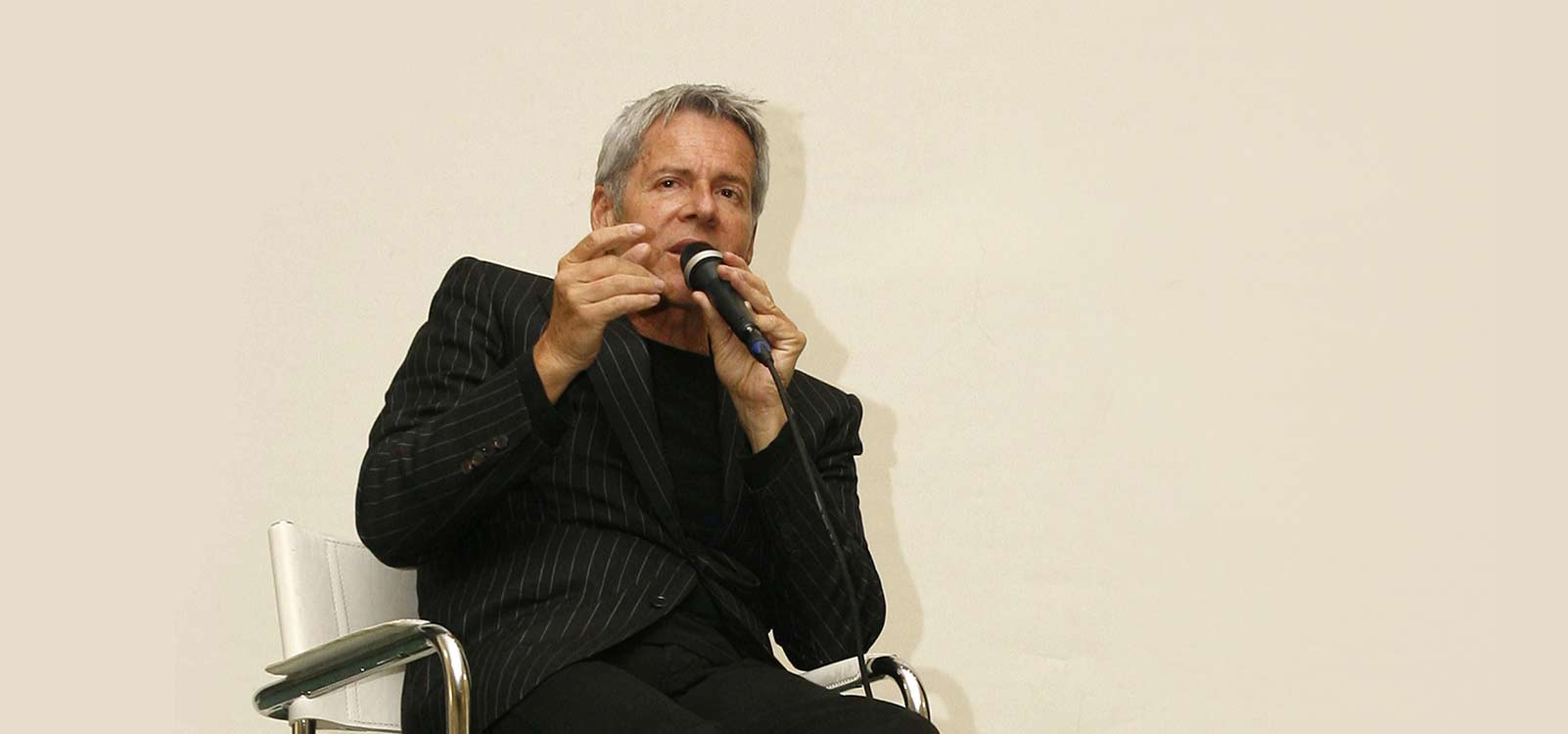


Claudio, you are celebrating 50 years of a musical career and for two years you were the artistic director of the most important Italian television show: “life, therefore, is now?” “Always. If only because the past is no longer here and the future is not here yet. The present is the moment the Latins invited us not to lose. ‘Seize the day’, they said, indeed. Which does not at all mean ‘living from day to day’, as some believe. Rather, it means: not wasting time. ‘It is not that we have little time, Seneca warned, but that we waste so much of it.’ Those who live in the memory of the past or in the longing for the future do not live. And they lose the only time that is truly given to us: the present. It is here and now that our life lives. And it is here and now that we must live it. The future is the destination, the past is the experience that must guide us, but it is on the road of the present that we must walk. Without losing even a metre.”
You, in the meantime, between past and present, have become an icon of Italian discography. Some of your songs have the extraordinary power to take us back in time: to the lighters at concerts, to the thousand-lira notes, to the telephone tokens, to first loves and to old Citroëns. During your concerts, which is the song that in your opinion is most evocative for the audience, and for what reason? “There is not just one. Fortunately, I would add. Not only because not everyone has walked the same road as I have, very many joined along the way, but also because we do not all have the same sensitivity and we do not all ask the same things of songs. Not to mention that every song speaks to each person in a different way. The notes and the words are the same for everyone, but they tell each of us different things. And this is precisely the strength of music: that it always finds the right notes and words for everyone.”
We will find out on your live tour: how will the concert that will take place in Zurich unfold? Will you follow a particular set list or leave room for improvisation? “No improvisation. Not in the set list, at least. It is an anthological concert in which I have tried to gather the best-loved songs, by me and by those who follow me, and I have arranged them in chronological order. An absolute first: no one has ever done it. But it is my story, and I realised at once that the best way to tell it was to start from the beginning. The fact is that, as we grow, we change. Our way of seeing things changes the songs, and the songs change our way of seeing things. It is an exchange. A continuous one. Without the pieces that preceded them, ‘Strada facendo’ or ‘E tu come stai?’, ‘La vita è adesso’ or ‘Mille giorni di te e di me’, to give just a few examples, would never have been the same. And none of them would ever have been born without ‘Questo piccolo grande amore’. What interested me was to tell this exchange, this growing up together. Which is, after all, the growing up together that also involves an artist and his audience. And, since music has always been the centre of my life, I thought it was right to place it ‘Al Centro’, both ideally and physically. Hence the idea of the central stage, which reduces the distances to a minimum: everyone sees better and, above all, hears better, also because the amplification is distributed much more evenly and one can rely more on the quality than on the quantity of the sound. Not to mention that the stage space, larger and modular, becomes one of the protagonists of the show. All this makes ‘Al Centro’ a sort of ‘total theatre’ in which sounds, voices, lights, images, choreographies and performances merge with the music, to make it even more capable of moving us and making us dream.”
I would like to ask you a question as a ‘person informed of the facts’. In your discography there are many pieces considered evergreens. Do you believe that today it is easy to sense the potential of a song that could be listened to as a classic even 20 years from now? In your experience, are ‘timeless’ songs still being produced, like those you have given us with your repertoire? “Yes, but it is more difficult every day. And not only because the combinations between the notes are countless but not infinite and, therefore, the most beautiful songs have already been written and fewer and fewer remain to be written. But also because music today is no longer at the centre of our thoughts. It is periphery, background. In the 1960s and 1970s, it was the ‘social network’. Young people got to know each other, talked to each other, loved each other, lived through music. Today it is no longer so. Young people have other interests. Other things inspire them. Music is there, but it is background. You hear it everywhere, but you no longer listen to it. And this does it no good, because it does not allow it to grow, to mature, to develop. When I was a boy, there was a band (at the time they called them ‘complessi’) in every cellar, and everyone went around with a guitar slung over their shoulder. Today people play much less. And music suffers for it. It finds fewer souls and fewer hearts to entrust itself to. As a musician, I hope it is only a phase, that it ends soon and that the young start sowing music again. And, sooner or later, you will see that the beautiful songs will bloom again too.”
And this positive and romantic way of thinking of his has, at bottom, already infected us too… thank you, Claudio!