Pubblicità


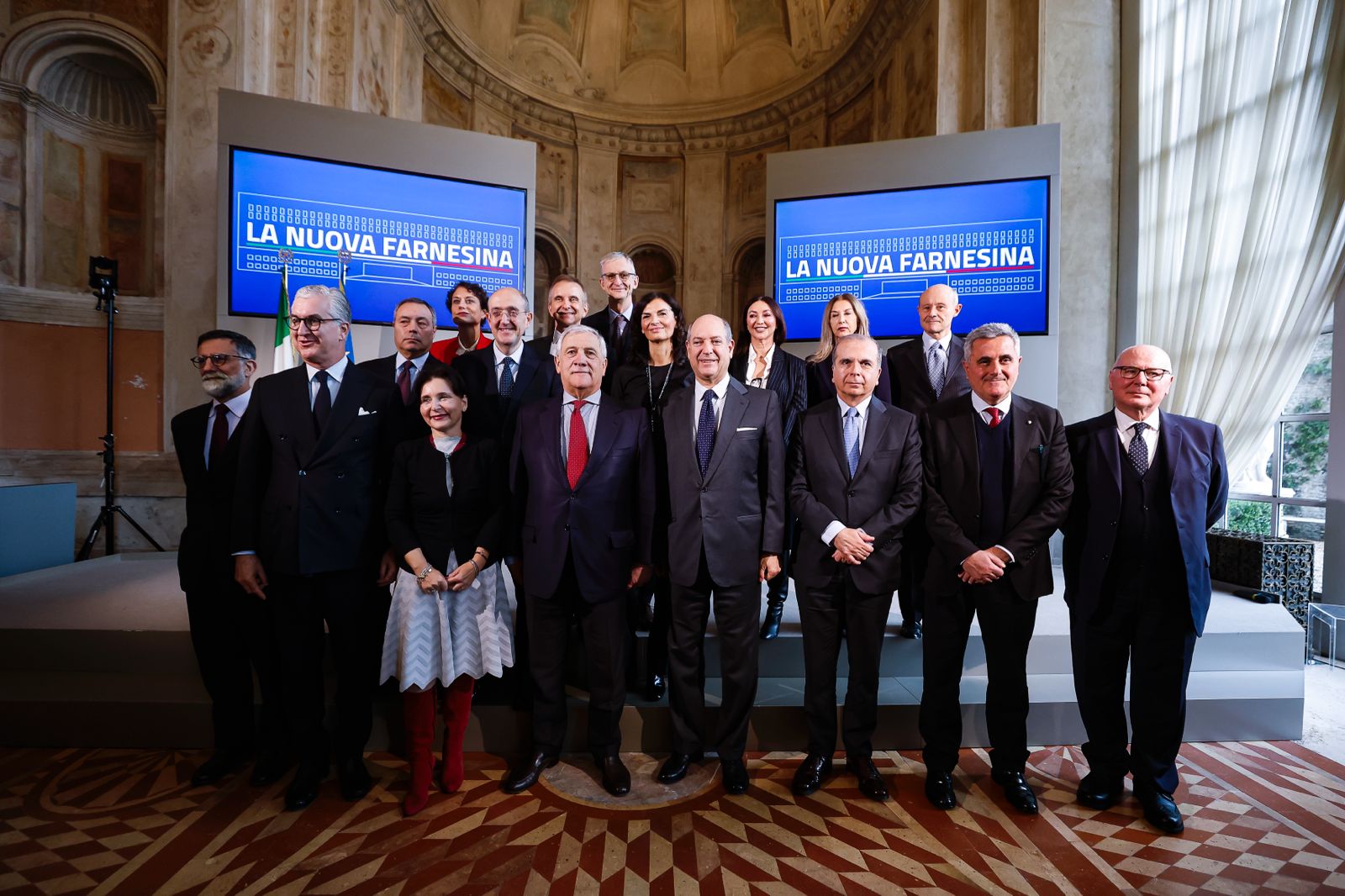


Diplomatic representation does not end with political protection and assistance to fellow citizens. Embassies and consulates have always been the country's economic antennae as well: they promote exports, accompany businesses on foreign markets and harness culture and language as levers of influence. With the reform of the Ministry of Foreign Affairs and International Cooperation that came into force on 1 January 2026, this economic calling moves from the background to the centre of the organisational chart. The pivot of the change is the new Directorate-General for Growth and Export Promotion (DGCE), tasked with turning the diplomatic-consular network into a true "growth diplomacy".
The reform, strongly championed by Minister Antonio Tajani, redesigns the Ministry around two complementary pillars, one political and one economic, entrusted to two Deputy Secretaries-General. Alongside the Directorate for Political Affairs and International Security, the Directorate for Growth and Export Promotion is born; to these are added a new Directorate for cybersecurity and the strengthening of the Directorate for Services to Citizens Abroad and Migration Policies.
In formal terms, the DGCE is not an entirely new structure: it inherits the legacy of the Directorate-General for the Promotion of the Country System, of which it is the renaming, and absorbs the competences of the abolished Directorate-General for Public and Cultural Diplomacy. In this way, economic-commercial promotion and cultural promotion converge under a single direction: promotion of the Italian language and Italian culture abroad, management of the Italian Cultural Institutes, scholarships and school and academic exchange programmes. It is a return to an integrated model, in which economic diplomacy and cultural diplomacy answer to a single system strategy.
The declared objective is ambitious and measurable: to contribute to reaching 700 billion euros in exports by the end of the legislature, through the implementation of the Action Plan for Italian exports. Consistently, for the 2026-2028 three-year period the MAECI presents itself as an "economically driven" Ministry, with priorities centred on the internationalisation of businesses, support for exports and the attraction of investment.
The operational heart of the reform is the transformation of the role of the diplomatic missions. Embassies are conceived as platforms for promoting Italian "know-how": from places of institutional representation to support centres for those who export or internationalise, with dedicated services and qualified staff. To coordinate these activities, a specific "export room" is planned, while assistance to businesses is strengthened in close coordination with the agencies of the Italy System: ICE-Agency, Cassa Depositi e Prestiti (CDP), SIMEST and SACE.
The DGCE coordinates the strategies and activities of the diplomatic-consular network in the field of economic-commercial and cultural promotion and of Italian excellence. Its remit also includes now well-established promotion tools: integrated promotion, which harmonises economic and cultural diplomacy around the concept of the "Marchio Italia" (including the scientific, linguistic and educational components), the system missions in priority countries, the attraction of tourist flows in coordination with ENIT and sports diplomacy, institutionalised in January 2024 as a lever for visibility and growth.
On the financial front, the Director-General of the DGCE chairs the Facilitations Committee that administers the instruments managed by SIMEST in support of the internationalisation of businesses, confirming the role of economic control room assigned to the new Directorate.
Switzerland represents a paradigmatic terrain for measuring the effectiveness of this model. Economic relations are the jewel in the crown of bilateral ties: in 2024 trade amounted to 45.8 billion euros, with a trade surplus for Italy of 14.45 billion, up 14.5%. In the same year Italy confirmed itself as the second supplier and fifth trading partner of the Confederation. Added to this is the human and social dimension of the relationship: over 85,000 Italian cross-border workers cross the border every day, and since 1 January 2024 the new Agreement on the tax treatment of cross-border workers, signed in December 2020, has been in force.
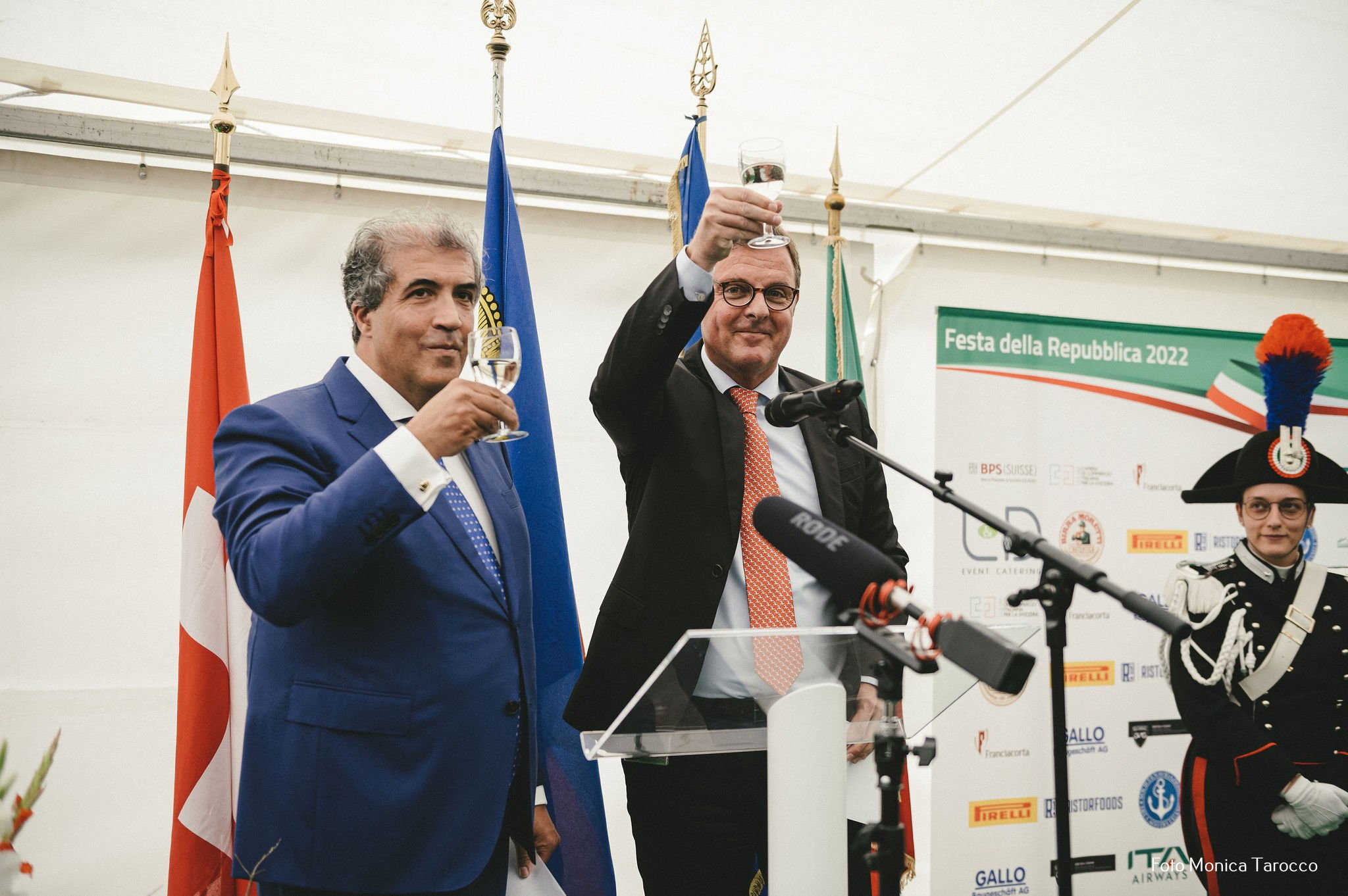
The Italian diplomatic-consular network in Switzerland reflects this density of ties. The Consulates General of Basel, Geneva, Lugano and Zurich report to the Italian Embassy in Bern, which is also accredited to Liechtenstein; Lugano and Zurich are among the first-class consulates general of the worldwide network. Within the Embassy, the Economic, Commercial and Financial Section promotes the intensification of bilateral trade and coordinates the actors of the Italy System present in the territory.
Around the missions there operates, in fact, an articulated ecosystem: the ITA/ICE Agency, with offices covering in particular Zurich, Geneva and Basel; ENIT for tourism promotion, with a representative office in Zurich; the Italian Cultural Institute of Zurich, which programmes events on an almost weekly basis; and the Italian Chamber of Commerce for Switzerland (CCIS), founded in Zurich in 1909, an institutional point of reference for businesses engaged in trade with Italy. Italian exports to the Confederation range from goldsmithery to leather goods, from pharmaceuticals to machinery, from footwear to clothing through to electrical appliances.
Initiatives such as the working days on the "Sistema Italia" promoted by the Bern Embassy, which bring together the diplomatic network, ICE, IIC, the Chamber of Commerce, parliamentarians elected abroad, CGIE and Com.It.Es. around the theme of Made in Italy, anticipate in practice what the reform now intends to systematise: a single direction that holds together economic and cultural promotion and the protection of the Italian community.
The reform places Italy in a peculiar position compared with the main European partners such as France, Germany, the United Kingdom and Spain, which still maintain a sharper distinction between diplomacy and trade. Achieved, according to the Ministry, "at zero cost" through internal reorganisation, the new architecture will be judged on results: on the ability of the missions to translate into concrete services for small and medium-sized enterprises and on the actual willingness of the business fabric to make use of the instruments made available. The Swiss case, for geographical proximity, economic complementarity and volume of trade, will be among the first to offer a tangible measure of the effectiveness of "growth diplomacy".