Pubblicità




Starting today, TuttoItalia opens a new column, Politica. It is not born to comment on political parties, but for a much more concrete reason: those who live outside Italy almost always find out late, or never find out at all, when there is a vote and what it is about. The municipal elections of your hometown, the regional elections, the referendums, the election of your representatives abroad. They are full rights, exercised by very few only because nobody gives notice. We start with the closest deadline, and it directly concerns those living in Switzerland.
More than six hundred thousand Italians live in Switzerland. At the last Comites elections, in 2021, 433 of them voted in Bern.
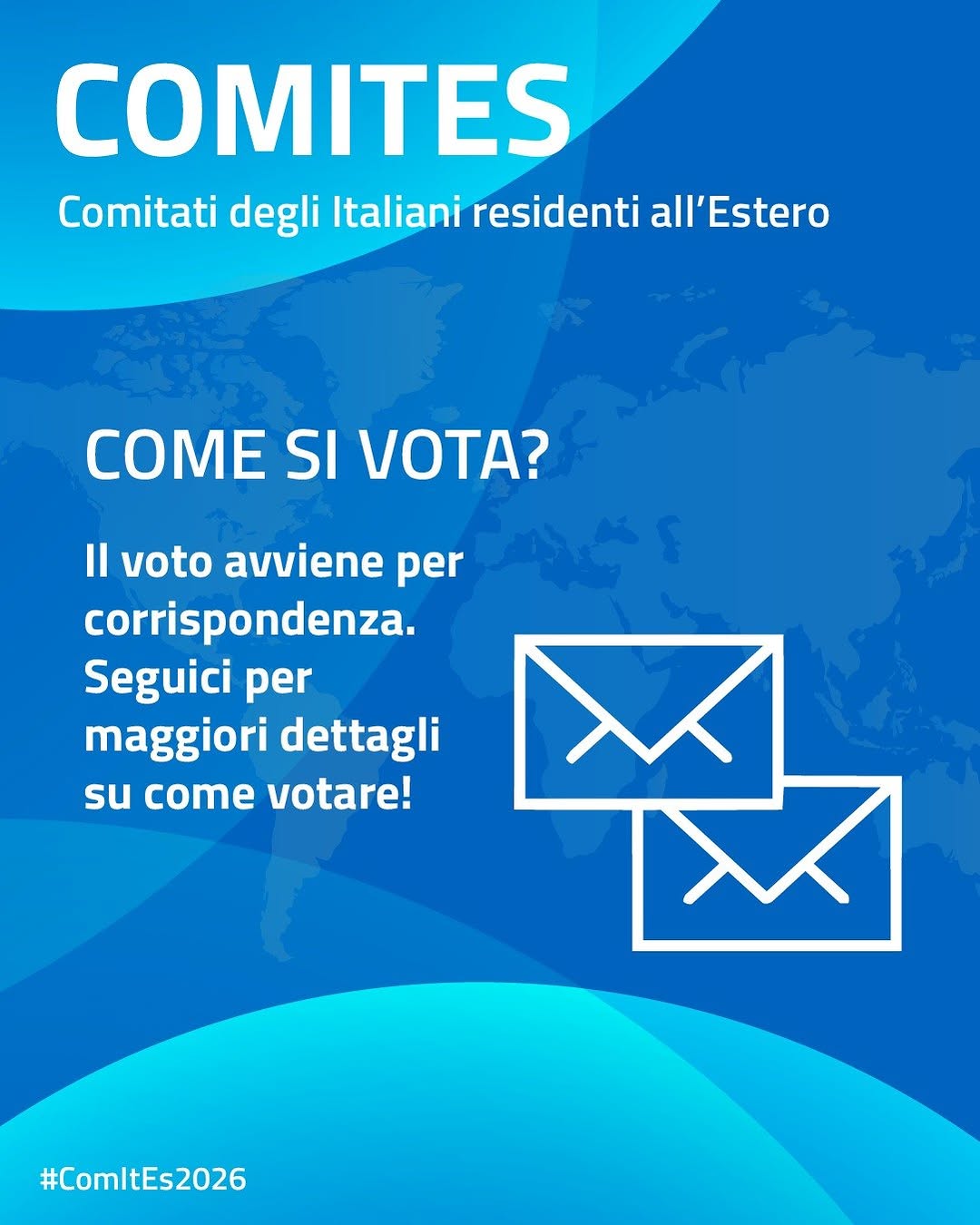
On 4 December 2026 the Comites, the Committees of Italians Abroad, are up for renewal. The date is the one indicated by the Farnesina in the information campaign launched in July; formal confirmation will come with the decree calling the elections. It is the only consultation in which Italians residing abroad vote comfortably from home, by post, without returning to Italy.
There is, however, one rule that makes all the difference, and it is the reason why this article comes out today and not in November: postal voting is not automatic. The envelope with the ballot does not set off on its own. To receive it, you must submit to your consulate an application for registration on the electoral roll, and the application must arrive by the thirtieth day before the vote, therefore by 4 November 2026. Those who do not submit it do not receive the ballot and do not vote. In 2021 the same deadline fell on 3 November and went almost unnoticed in Switzerland.
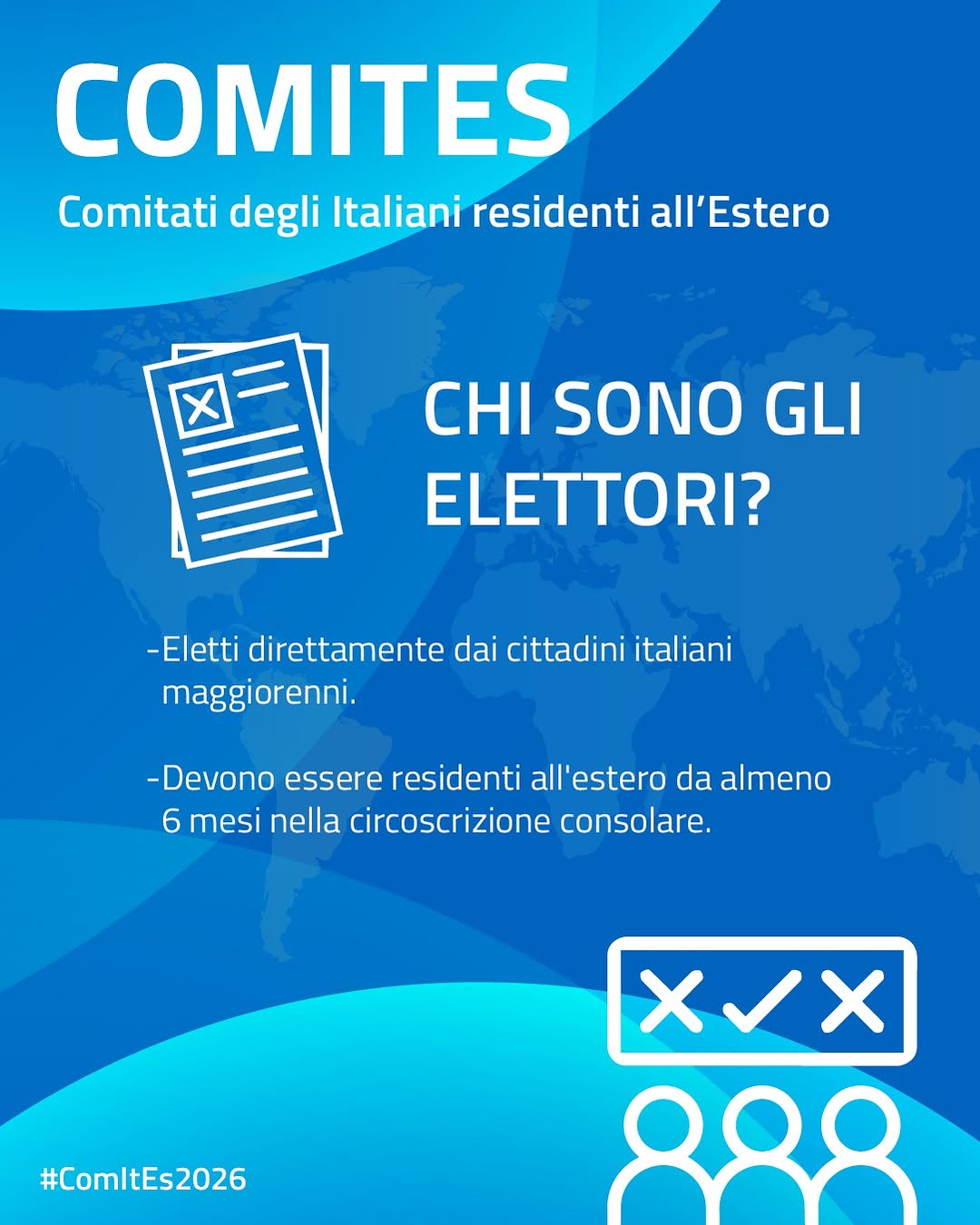
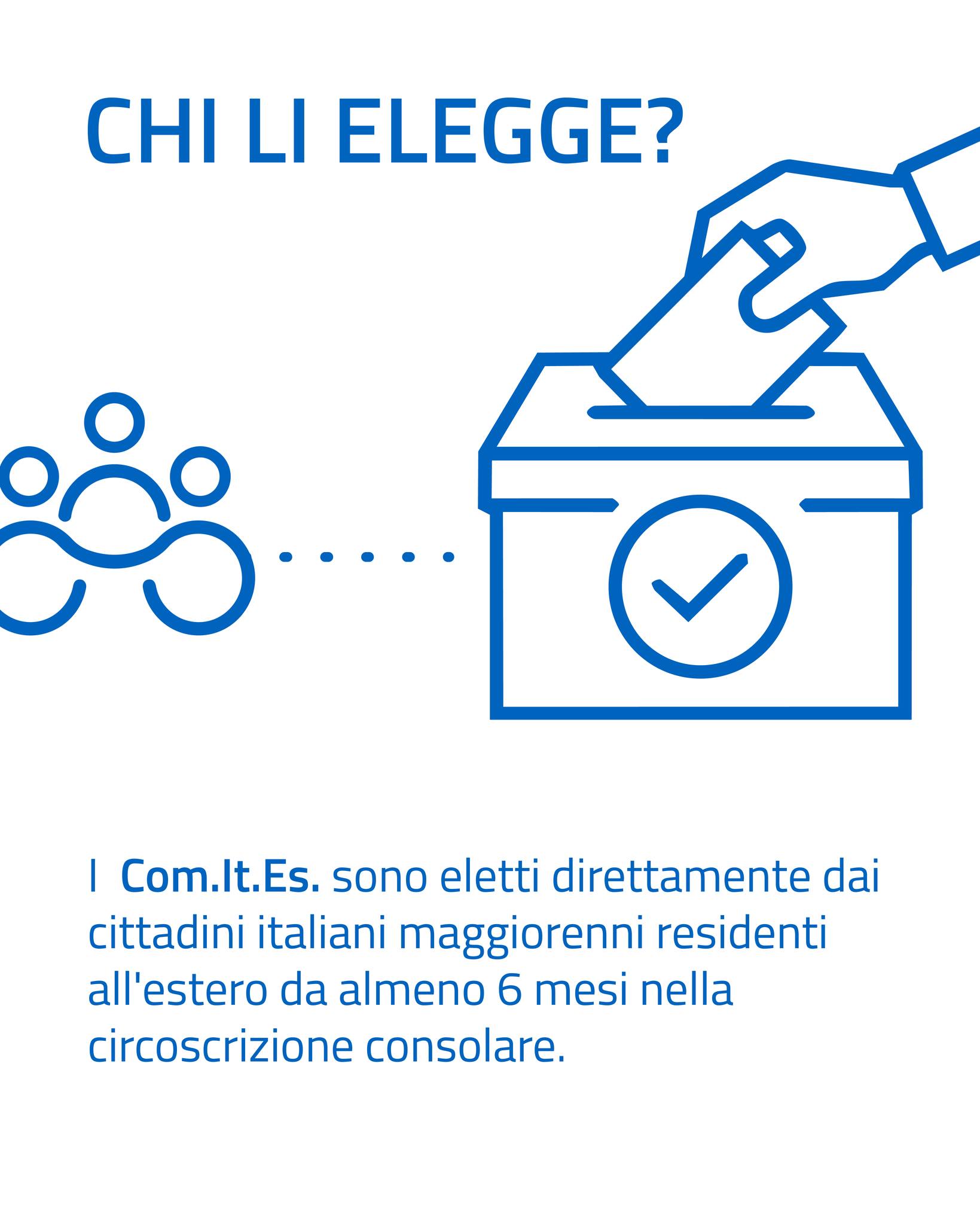
Adult Italian citizens registered with AIRE and resident for at least six months in their consular district are entitled to vote. One practical detail that wipes out thousands of ballots every time: the envelope is sent to the address on file with AIRE. Those who have moved house and have not notified the consulate of their new address will receive nothing, even if they have duly registered on the electoral roll. Updating your address is, incidentally, a legal obligation, subject to sanctions, and it is best done before November.
The rest of the calendar is already written. Consulates send out the voting packs between the thirtieth and the twentieth day before the vote, therefore in a window running roughly from 5 to 14 November. Those who receive it should vote and immediately send back the pre-paid envelope, because what counts is not the dispatch date but the arrival: the envelope must reach the consulate by midnight on 4 December 2026. A ballot that arrives on 5 December is a lost ballot.
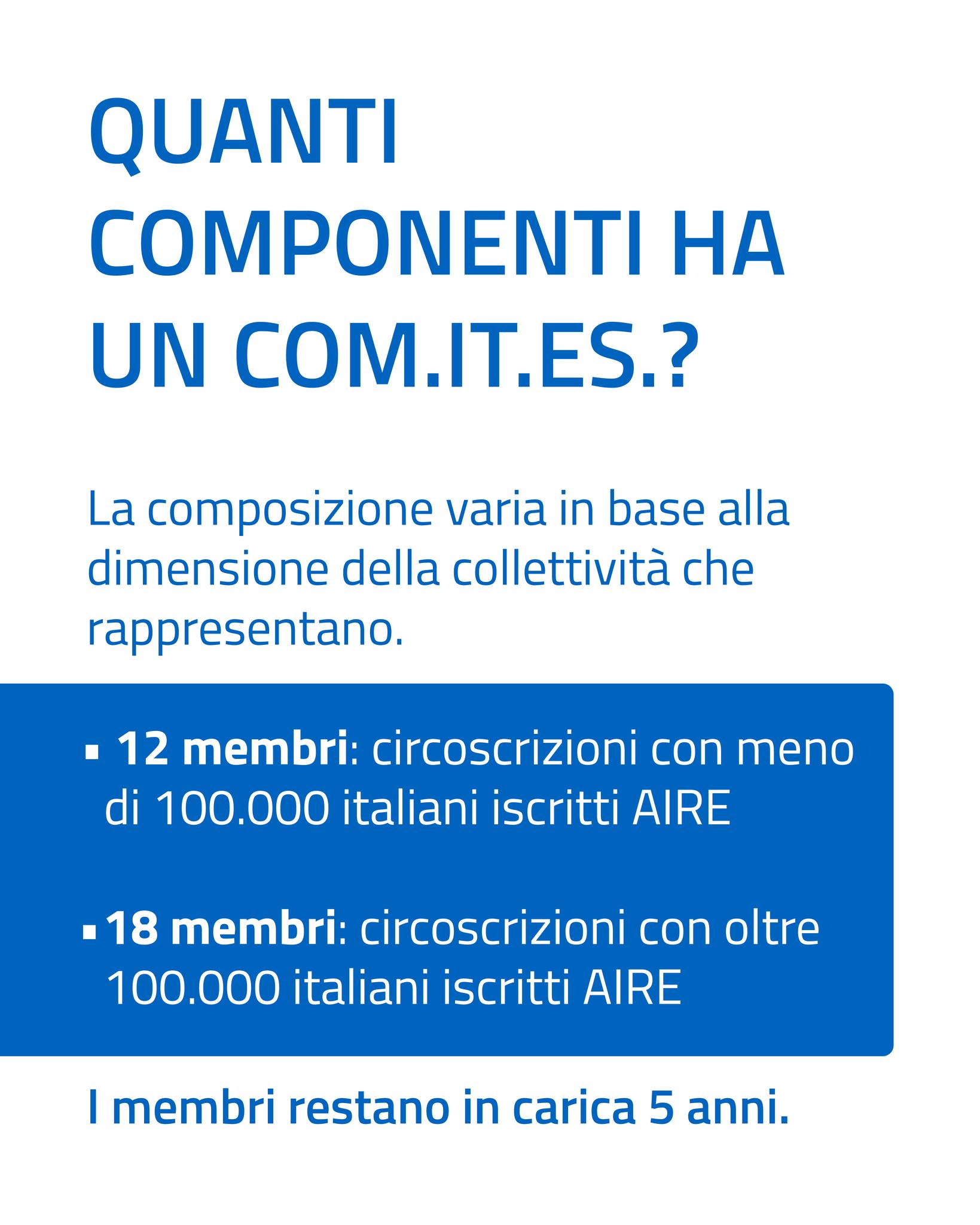
The Comites are elective bodies established in 1985 and governed today by law 286 of 2003. They are elected directly by fellow Italians, serve for five years and have twelve members in districts with up to one hundred thousand residents, eighteen in those above that threshold. They are the recognised interlocutor of the consulate and the embassy on everything that touches the daily life of the community: consular services and waiting lists, schools and Italian language courses, assistance to fellow citizens in difficulty, cultural and associative initiatives. Their elected members also contribute to the composition of the General Council of Italians Abroad.
In Switzerland, the weight of the numbers makes the appointment anything but a formality. In the consular district of Zurich alone, the consulate counts 240,159 resident fellow citizens according to the statistics published for the first half of 2026, and across the country AIRE members exceed six hundred thousand. At the 2021 elections, however, the valid votes were 1,548 in Lugano, 1,045 in Basel, 900 in Geneva and 433 in Bern. A few hundred ballots decided who represents hundreds of thousands of people: it is exactly the kind of disproportion that can only be corrected with information.
In 2021 seven committees were elected in Switzerland, and it is worth recapping them because almost nobody knows which one is theirs.
Comites of Zurich: in 2021 it represented around 144,000 fellow citizens in nine cantons of German-speaking Switzerland, from Zurich to Lucerne, Zug, Schaffhausen, Schwyz, Glarus, Uri, Obwalden and Nidwalden. Website: comiteszurigo.ch.
Comites of St. Gallen: covering eastern Switzerland, Graubünden and the Principality of Liechtenstein. Website: comites-sangallo.ch.
Comites of Bern: twelve members for the district of Bern and Neuchâtel. Website: comites-bernaneuchatel.ch.
Comites of Basel: covering the Basel area, today reachable on a new domain compared to five years ago. Website: comitesbasilea.org.
Comites of Lausanne: covering the cantons of Vaud and Valais. Website: comites-losanna.weebly.com.
Comites of Geneva: covering the canton of Geneva. Website: comites-ginevra.ch.
Comites of Lugano: covering Ticino, where according to the committee itself more than 122,000 Italian citizens reside, with free advice desks in Lugano and Bellinzona. Website: comitesluganoticino.ch.
That, however, is the 2021 map, and in the meantime the consular network has been reorganised: today the Consulate General in Zurich also covers St. Gallen, Thurgau, the two Appenzells, Graubünden and Liechtenstein, while Geneva also covers Vaud and Valais. This means that some committee districts no longer coincide with the consular ones, and which committees will actually be renewed on 4 December will be established by the calling decree.
The source to check, both for your own committee and for the exact address to send the application to, therefore remains the website of your consular office, where contact details are up to date and in some cases have changed in recent years: the Consulate General of Italy in Zurich, the Consulate General of Italy in Geneva, the Consulate General of Italy in Lugano, the Consulate of Italy in Basel and the consular chancery of the Embassy of Italy in Bern.

It is worth clarifying, already in this first article, a confusion that recurs constantly. For general elections and referendums, AIRE members vote by post in the Overseas Constituency, and in that case the envelope arrives without any application, except for those who choose the option of voting in Italy by notifying the consulate within the tenth day after the elections are called. For municipal and regional elections, on the other hand, there is no form of voting from abroad: you must return and vote in the municipality where you are registered, which sends a notice card with the procedures and the travel discounts provided each time. This is why thousands of Italians in Switzerland have never voted for the mayor of the town where they were born, despite having every right to do so.
Italy's electoral 2026 is, from this point of view, now behind us: the constitutional referendum on justice was held on 22 and 23 March together with the by-elections, the municipal elections on 24 and 25 May with the run-offs in June, and the Sardinian round on 7 and 8 June. The next round of local elections is expected in spring 2027, with the regional elections in Sicily in the autumn and the general election at the natural end of the legislature, also in 2027.
From now on this column will keep an updated calendar of Italian votes, national and local, and will notify by email those who request it when there is a vote in their municipality or region of origin. If you want to receive the alerts, let us know your municipality and region of origin by writing to votazioni@tuttoitalia.ch.
The first useful reminder, though, is already in these lines: 4 November to register, 4 December to vote.